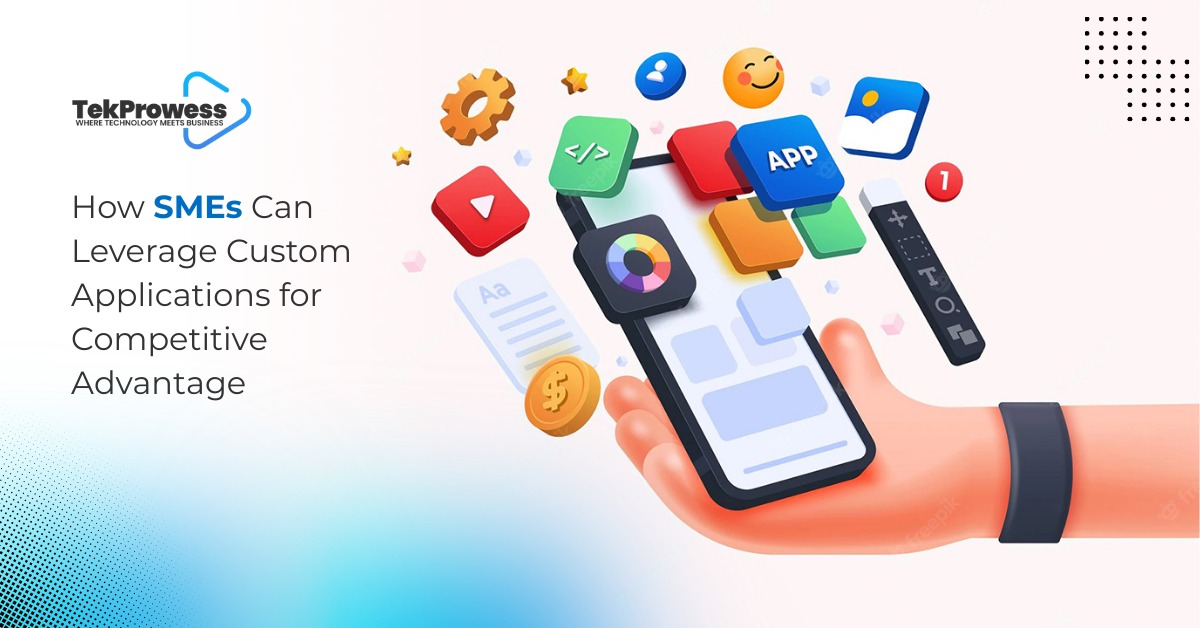
How SMEs Can Leverage Custom Applications for Competitive Advantage
In a world where digital transformation dictates success, small and medium-sized enterprises (SMEs) can no longer rely solely on generic software to keep up.
By TekProwess
Enterprise Solution Architects
Understanding the Need for Custom Applications
SMEs operate in niche markets with specialized processes, often requiring functionalities that standard software cannot provide. Generic tools may involve workarounds, integrations, and manual processes, leading to inefficiencies and lost opportunities. Custom applications, however, are designed with the business’s unique workflows, objectives, and growth trajectory in mind.
By collaborating with custom application development companies, SMEs can create software that aligns perfectly with their operations, automates repetitive tasks, and facilitates data-driven decision-making. This tailored approach not only improves efficiency but also enhances customer experience, a critical differentiator in today’s market.
Key Benefits of Custom Applications for SMEs
Streamlined Operations
Custom applications can automate routine tasks, such as inventory management, invoicing, or customer follow-ups. Automation reduces human error, accelerates processes, and frees up staff to focus on strategic initiatives. For instance, a custom CRM can integrate sales, marketing, and support functions, providing a unified platform that increases productivity.
Scalability and Flexibility
Unlike off-the-shelf software, custom applications are built to evolve with your business. As SMEs expand or pivot to new markets, the application can be scaled to accommodate new features, additional users, or increased data volumes. Partnering with custom application development companies ensures that scalability is embedded from the outset, preventing costly migrations or software replacements in the future.
Enhanced Customer Experience
In an era where customer expectations are higher than ever, personalized experiences are key to retention and loyalty. Custom applications can offer tailored interfaces, personalized recommendations, and efficient service delivery. For example, a bespoke e-commerce platform can provide customized product suggestions, streamline checkout processes, and optimize mobile responsiveness, resulting in higher conversion rates.
Data-Driven Insights
Data is one of the most valuable assets for SMEs, but deriving actionable insights requires appropriate tools. Custom applications can integrate analytics dashboards and reporting features that track key performance indicators in real-time. This enables business leaders to make informed decisions, identify trends, and respond proactively to market changes.
Competitive Differentiation
Perhaps the most significant advantage of custom applications is the differentiation they provide. When a software solution is uniquely aligned with an SME’s processes and customer expectations, it becomes a strategic asset that competitors cannot easily replicate. This differentiation can translate into faster service delivery, higher customer satisfaction, and stronger brand loyalty.
Choosing the Right Partner
The success of custom application development depends heavily on selecting the right partner. SMEs should look for companies with proven expertise in their industry, a robust development methodology, and a track record of delivering scalable, secure, and user-friendly solutions. Custom application development companies bring specialized skills in areas such as UI/UX design, cloud integration, mobile responsiveness, and cybersecurity, ensuring that the application supports both current needs and future growth.
Engaging in a collaborative development process is also critical. SMEs must communicate their objectives, workflows, and pain points clearly, allowing developers to translate business requirements into functional software. A transparent project management approach, iterative development cycles, and continuous feedback loops contribute to a high-quality final product that delivers tangible business value.
Conclusion
For SMEs striving to compete in today’s fast-paced digital economy, investing in custom applications is no longer a luxury, it's a necessity. By leveraging the expertise of custom application development companies, businesses can streamline operations, enhance customer experiences, and harness data for strategic decision-making. Most importantly, custom applications empower SMEs to differentiate themselves in crowded markets, turning technology into a true competitive advantage.
In a world where agility, efficiency, and personalization determine success, SMEs that embrace custom software solutions are better positioned to thrive, innovate, and outpace competitors. The key lies in choosing the right development partner and aligning technology with business strategy, a combination that can redefine the growth trajectory of any SME.
Written by TekProwess
Enterprise Solution Architects
Specialists in enterprise ERP transformations, Odoo module customizations, and cloud solutions.